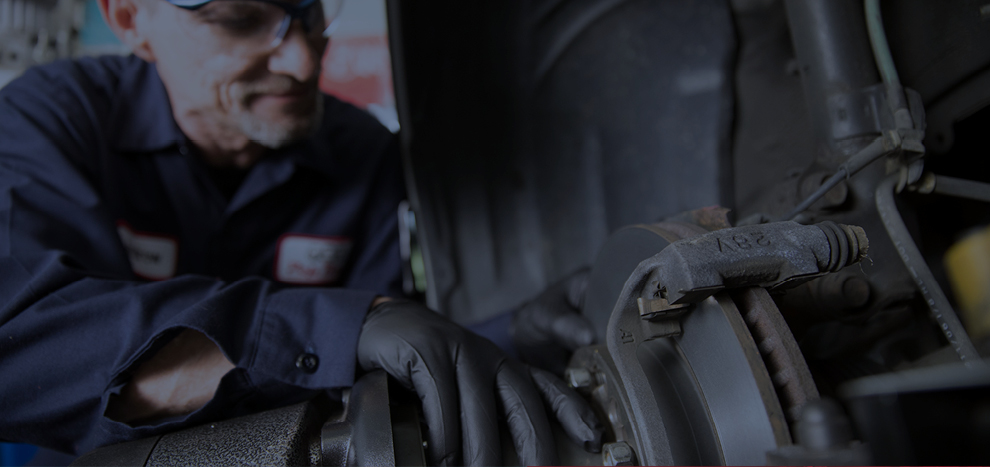
Your brakes are one of the most important safety features on your vehicle. No doubt about it. That’s why, when something is wrong with your brake system, you should know beyond a doubt. This August, between road trip season and a return to your normal routine, we think it’s important to show you the ropes when it comes to brakes, and how we’re prepared to help.
Leave Your Brakes to the Pep Boys Pros
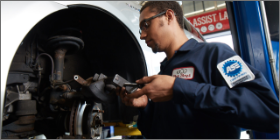
For all the work they put in, your brakes deserve an annual inspection and the best available care. Our ASE Certified technicians are ready to help with a FREE brake check—the moment you notice any telltale signs of a faulty system, we’ll be ready to get your vehicle back into shape with the experience to handle any issue.
Know More, Spot More
Each year, your brake system, brake linings, rotors and drums should be inspected by a professional. Additionally, there are five major things you can look for yourself to identify a brake-specific problem:
Warning Light
Most modern vechicles display a unique warning light when there may be something wrong with your brakes. Refer to your owner's manual to identify it. In fact, it's a good idea to learn them all.
Grinding Sounds
There are two reasons brakes grind: 1. Heavy wear causing contact between the rotor disk and brake pad's backing plate. 2. An object lodged near the disk or caliper. Both demand immeadiate attention.
Veering
Sometimes, your alignment’s not the problem. A vehicle’s tendency to pull to one side can be attributed to brakes worn unevenly, faulty caliper hoses or a stuck caliper.
Unresponsive Pedal
Your brake pedal should always feel firm. A brake pedal that isn’t immediately responsive is unsafe. If yours is beginning to feel soft or spongy, your system needs a check.
Screeches, Squeaks, and Squeals
Your brake pads/rotors may be making contact as a result of heavy wear or intense braking. Sometimes, squeaking brakes can also mean warped rotors, meaning the pads can’t make even contact, causing further wear.
What We’re Looking For
| Fluids | Brake fluid should be contaminant-free and replaced if it’s not. |
| Hardware/ Hydraulics | Every component is checked for signs of leaking, looseness and more. |
| Pads | We inspect each brake pad’s friction through careful measurement. |
| Surfaces | Front and rear rotors and drums are inspected for cracks and discoloration. |