Why Does my Tire Bulge?
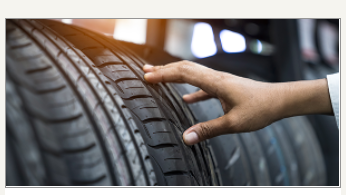
Symmetrical tire tread has the same pattern – continuous grooves and/or independent lugs – across the whole tire. This type of tire is the most common and found on most non-high-performance passenger cars because it is typically quiet and long-lasting. Symmetrical tires can be rotated in many different ways, which helps to prolong the life of the tires and makes them more versatile.
How do Bubbles and Bulges Form?
Asymmetrical tire tread, most commonly found on sports cars, is a bit of hybrid in that it combines a variety of tread patterns for maximum grip on both wet and dry roads. Usually, the inside and middle parts of the tire will be designed for wet and/or winter traction while the outside of the tire will have large tread blocks for maximum cornering capability on dry surfaces. To ensure that the tires are positioned correctly on the car (to maximize handling capabilities), the sidewalls are marked "outside only" and "inside only." Many different rotation patterns can be used for tires with asymmetrical tread patterns.
Always Inspect Your Tires
Directional/asymmetrical tire tread is the best of both worlds – it features the V-shaped pattern of the directional tread for discharging water away from the tire and the dry weather traction of the asymmetrical tread. You should follow the same rules as directional tires when it comes to rotation patterns. Vehicles equipped with different size tires on the front and rear (staggered), prohibit the ability to rotate directional/asymmetrical tires unless they are remounted.
Is It Safe to Drive on a Bubbled or Bulging tire?
Directional/asymmetrical tire tread is the best of both worlds – it features the V-shaped pattern of the directional tread for discharging water away from the tire and the dry weather traction of the asymmetrical tread. You should follow the same rules as directional tires when it comes to rotation patterns. Vehicles equipped with different size tires on the front and rear (staggered), prohibit the ability to rotate directional/asymmetrical tires unless they are remounted.
Can tire bubbles and bulges be fixed?
Directional/asymmetrical tire tread is the best of both worlds – it features the V-shaped pattern of the directional tread for discharging water away from the tire and the dry weather traction of the asymmetrical tread. You should follow the same rules as directional tires when it comes to rotation patterns. Vehicles equipped with different size tires on the front and rear (staggered), prohibit the ability to rotate directional/asymmetrical tires unless they are remounted.
Is It Safe to Drive on a Bubbled or Bulging tire?
Directional/asymmetrical tire tread is the best of both worlds – it features the V-shaped pattern of the directional tread for discharging water away from the tire and the dry weather traction of the asymmetrical tread. You should follow the same rules as directional tires when it comes to rotation patterns. Vehicles equipped with different size tires on the front and rear (staggered), prohibit the ability to rotate directional/asymmetrical tires unless they are remounted.