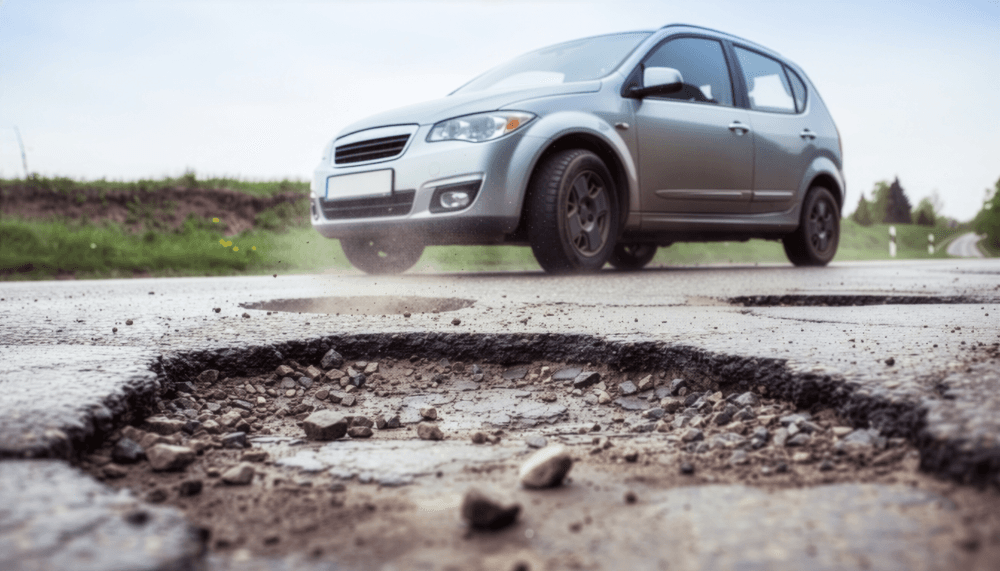
Potholes, uneven pavement, and road debris aren't just frustrating—they can lead to unexpected tire damage, steering problems, suspension wear, and costly repairs.
In its recent 2026 Worst Roads in America report, Pep Boys analyzed service data from its auto service centers across the country to identify the 30 U.S. metro areas with the highest rates of vehicle repairs commonly associated with challenging road conditions. Chicago claimed the No. 1 spot, while Southern markets accounted for more than 70% of therankings.
But no matter where you drive, rough roads can take a toll on your vehicle. Fortunately, a few proactive maintenance habits can help reduce your risk of unexpected tire and suspension repairs.
6 Tips to Protect Your Car from Potholes and Bad Roads
1. Check Your Tire Pressure Regularly
Underinflated tires may be more vulnerable to damage from pothole impacts, while overinflated tires can reduce ride comfort and affect how a tire responds to road hazards. Check tire pressure when tires are cold and follow the vehicle manufacturer's recommended pressure, typically listed on the driver's door jamb.
2. Inspect Your Tires for Visible Damage
Look for cuts, bulges, punctures, uneven tread wear, and other signs of damage, especially after hitting a pothole or driving through construction areas. Sidewall bulges can indicate internal tire damage and should be inspected promptly.
3. Pay Attention to Changes in Steering and Handling
If your car begins pulling to one side, your steering wheel sits off-center, or you notice unusual vibrations, don't ignore the symptoms. These may indicate alignment, tire, wheel, or suspension problems.
4. Slow Down When Approaching Rough Pavement
Reducing speed before reaching a pothole or uneven surface can help lessen the force of impact. Maintain a safe following distance so you have more time to identify road hazards and avoid sudden swerving that could put you or other drivers at risk.
5. Schedule Regular Tire and Suspension Inspections
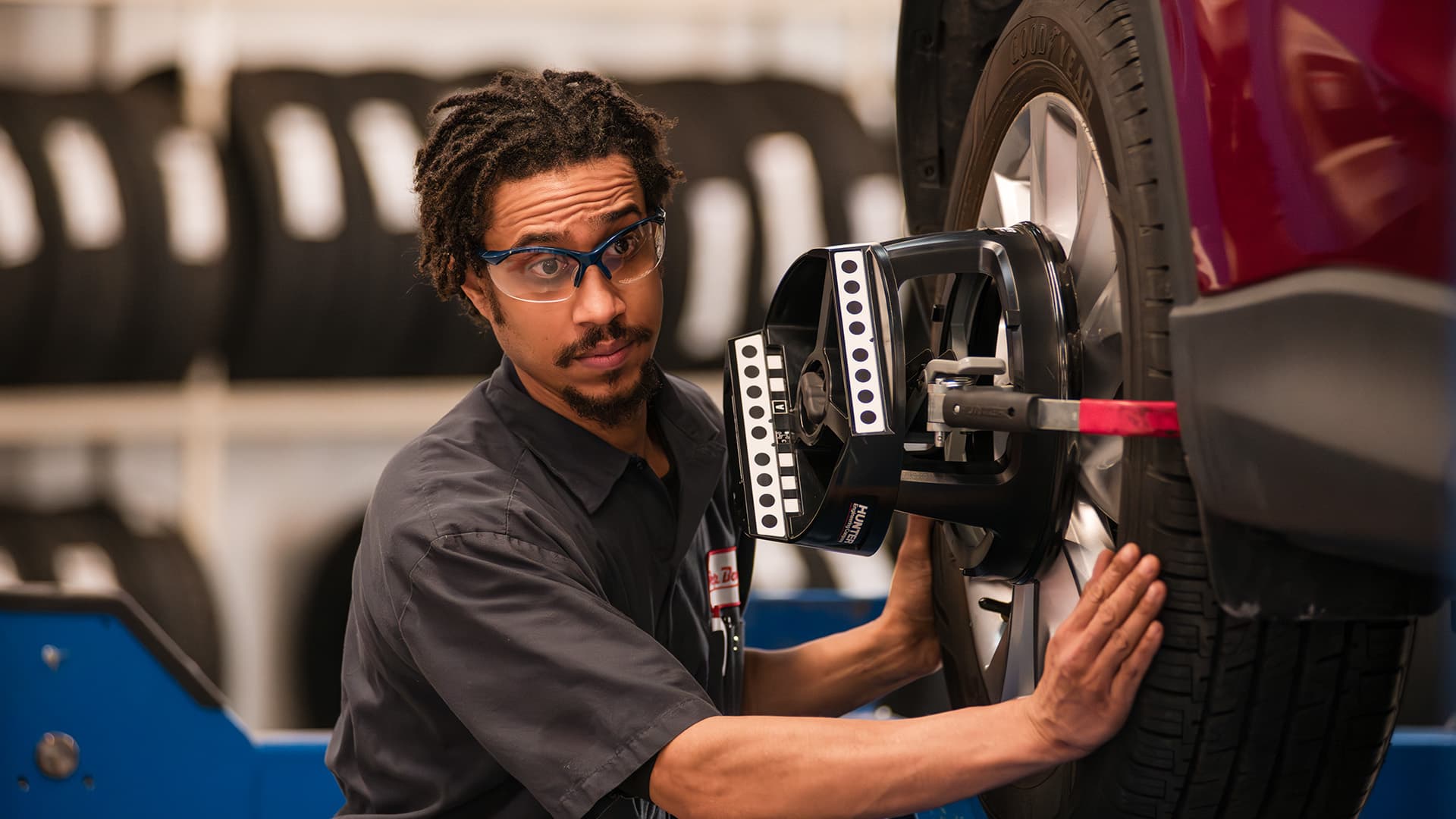
Routine maintenance can help identify uneven tire wear, worn suspension components and alignment problems before they lead to more extensive repairs.
If you've recently hit a significant pothole or noticed a change in how your vehicle drives, consider scheduling a professional tire, alignment, or suspension inspection at Pep Boys.
6. Keep Up with Alignment Checks
Arrange to have your wheel alignment checked at least twice each year (based on 15,000 miles of driving per year). Regular alignment checks can reduce excessive tire wear and lower fuel consumption because drag is reduced on tires. IT also makes driving and handling more comfortable.
Frequently Asked Questions About Potholes and Vehicle Damage
Can hitting a pothole damage your car?
Yes. A pothole impact can damage tires, bend wheels, affect wheel alignment, or wear or damage suspension components. The severity depends on factors such as vehicle speed, pothole depth, tire condition, and the force of the impact.
What should you check after hitting a pothole?
Check for visible tire damage, air loss, unusual vibrations, steering changes, and new noises. If your vehicle pulls to one side, vibrates, or handles differently, a professional tire, wheel, alignment, or suspension inspection can help identify the problem.
Can a pothole cause a flat tire?
Yes. A hard impact can puncture a tire, damage its sidewall, or break the seal between the tire and wheel, potentially causing rapid or gradual air loss. Some tread punctures can be repaired, while more severe damage may require replacement.
How do you know if you need a wheel alignment after hitting a pothole?
Common warning signs include a crooked steering wheel, pulling to one side, and uneven tire wear. An alignment check can determine whether your vehicle's wheel angles are outside manufacturer specifications.
Can you drive with a tire sidewall bulge?
No. A sidewall bulge may indicate damage to the tire's internal structure and an increased risk of tire failure. Avoid continuing to drive on the damaged tire and arrange for professional assistance.
Does tire road hazard protection cover pothole damage?
Yes. The Pep Boys Road Hazard Protection Plan, available when purchasing new tires, helps protect against eligible tire damage caused by potholes, nails, and road debris—damage that typically isn't covered by a manufacturer's limited warranty.
The plan includes:
- Free tire repairs: If a covered tire is damaged by a pothole, nail, or road debris and can be safely repaired, Pep Boys will repair it at no additional charge.
- Replacement or prorated refund: If the tire cannot be safely repaired, customers receive a prorated credit or refund based on the tire's remaining tread depth.
- Coverage for the usable life of the tire: Protection continues until the tire reaches 2/32 of an inch of remaining tread.
- Protection for the original owner: Coverage is nontransferable and ends if the tire is installed on a different vehicle.
While manufacturers’ limited warranties generally cover defects in materials or workmanship, road hazard protection provides an additional layer of coverage for eligible damage caused by everyday driving hazards.
Learn more about the Pep Boys Road Hazard Protection Plan and explore your protection options when purchasing new tires.
Keep Your Vehicle Road-Ready with Pep Boys
Even careful drivers can't always avoid potholes, rough pavement, or unexpected road debris. Regular tire maintenance, wheel alignments, and suspension inspections can help identify problems early and prevent minor damage from turning into more expensive repairs.
Whether you've recently hit a pothole or simply want peace of mind before your next drive, Pep Boys offers tire and auto repair services to help keep your vehicle performing at its best.
Schedule an appointment at Pep Boys to have your vehicle inspected and get back on the road with confidence.