When the tire pressure monitoring system (commonly known as TPMS) light comes on, it’s most likely time to add some air to your tires. You can find the correct tire pressure (or PSI) in your car’s manual or in your doorjamb. It’s important to check your manufacturer’s recommendations before adding air as under or over-inflated tires can cause unnecessary wear and tear on your tires or poor fuel economy.
How to Check your Tire PSI
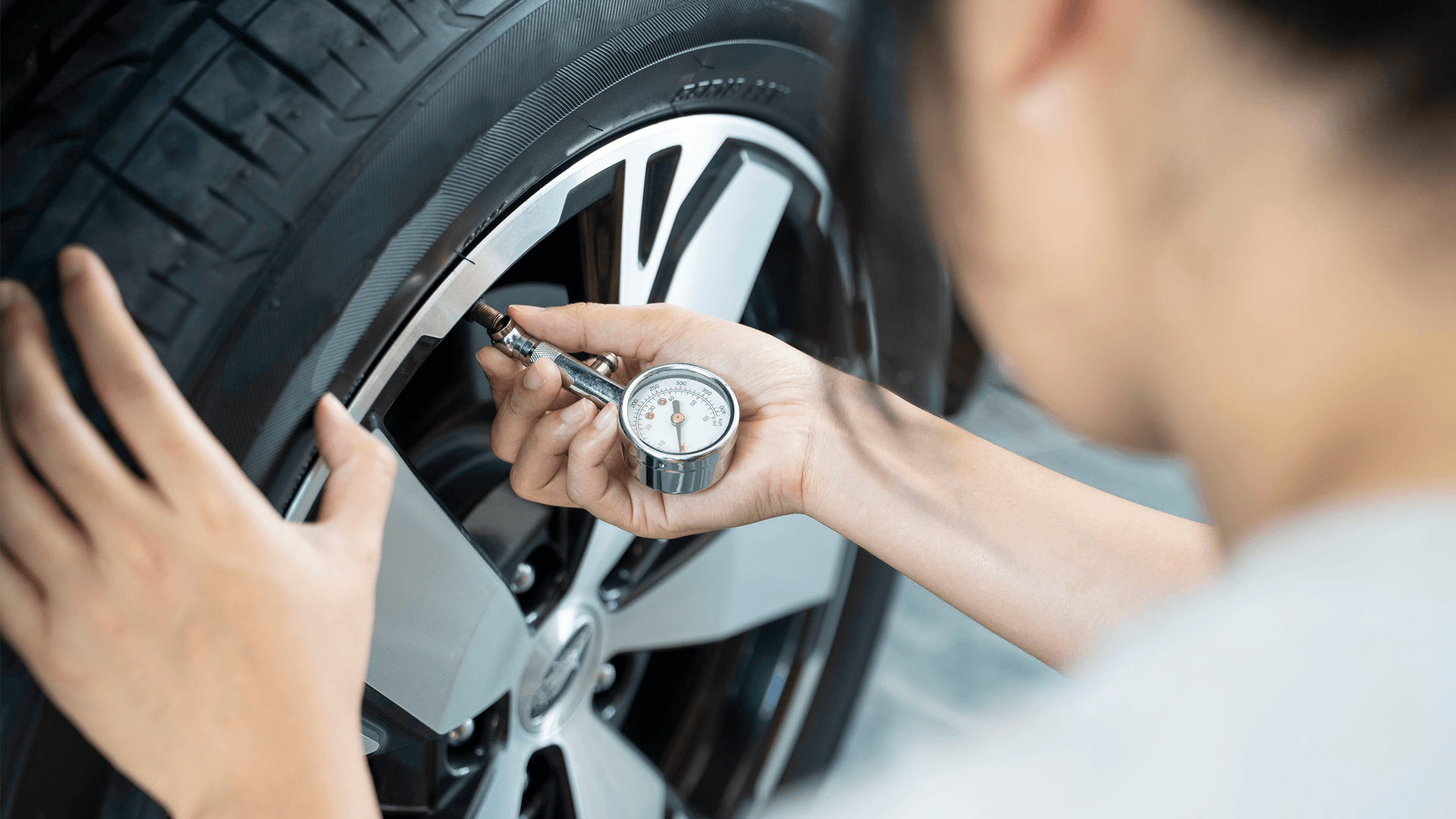
Commonly known as Tire Pressure, PSI stands for "per square inch" and is the standard method for measuring a tire's air pressure level. PSI is measured by the notches on a standard tire pressure gauge or with a number reading on digital gauges. By placing the gauge on the uncapped valve stem, you should get an instantaneous reading.
1.Check Your Doorjamb
You may have to flip through the pages, but the tire pressure table should be located in the tires and/or wheels section.
2.Check Your Manual
You may have to flip through the pages, but the tire pressure table should be located in the tires and/or wheels section.
To learn more about tire pressure, visit our TreadSmart page to find a variety of helpful articles and resources to help you learn everything you need to know about your tires, or make an appointment.