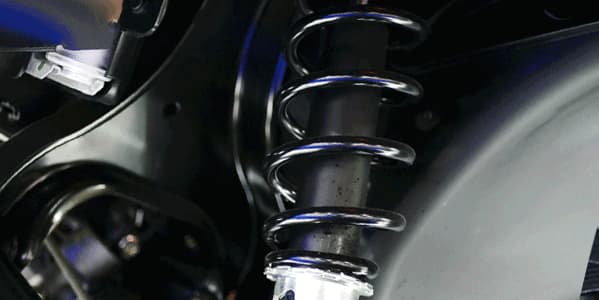
What are Air Shocks?
Installing a pair of air shocks on your vehicle allows you to increase its ride height, helping to bring the vehicle level when hauling a heavy load. When air shocks are installed with heavier springs on a truck chassis, they help to increase the useful load of the vehicle.
Shocks and springs are often the only difference between a half-ton truck or van and a three-quarter ton truck or van.
How do Air Shocks Work?
Air shocks work just like normal shocks. They are designed to withstand compression and damping forces. When you hit a bump in the road, your suspension compresses. The suspension then rebounds back to normal. Damping refers to how the suspension handles these compression and rebound forces after you hit a bump in the road. Heavy loads may cause compression and rebound forces to overwhelm your factory suspension. To haul heavy loads safely, you may need to install a pair of air shocks, as well as heavier springs on your rear suspension system.
Air shocks include metal fittings, a plastic air hose, and a Schrader valve to allow you to fill them with air after installation. An air shock pump or even a simple bicycle pump may be used to fill your air shocks. Air lines must be purged of moisture periodically as part of a regular maintenance routine.
How are Air Shocks Made?
Like normal shocks, air shocks have a metal, tube-shaped housing with a steel damping rod mounted inside of it. When compression forces move the damping rod, a type of fluid exchange happens in the tube-shaped housing. That fluid can be air, shock oil, or some combination of both, depending on the design of the shock.
Why do Air Shocks Fail?
- Damage to internal seals is the most common cause of air shock failure.
- Air shocks may fail to hold air pressure as external lines and fittings become worn and start to leak.
- Air shocks, like all shocks and moving parts, eventually fail as their constituent parts wear out this is normal.
- Air shocks should last at least 75,000 miles.
What Are the Symptoms of Air Shocks Failure?
- Air shocks fail to hold air.
- Bouncy suspension caused by insufficient damping action.
- Clunking or other noises as the suspension compresses and rebounds.
What Are the Consequences of Air Shocks Failure?
- Insufficient damping forces create an unstable, unsafe ride for you and your passengers.
- Heavy loads may bounce in the back of your truck of van as you drive over bumps, potentially damaging the property you’ve been trusted to haul.